

Packaging Trends That Will Actually Matter in 2026
If you only skim one packaging trend email this year, make it this one.


Most “2026 packaging trends” you’ll see right now are just Pinterest screenshots with confidence. Pretty, familiar, and already late. What actually matters next year isn’t about aesthetics, it’s about behavior, cost pressure, regulation, and shelf reality.
I spent the last year traveling through Milan, Paris, Shanghai, Singapore, New York, Los Angeles, London, and yeah even Ohio, plus a few more places here and there.
At each stop we hit up shops, agencies, and brands to discover or discuss what was burning up the retail shelves. Most examples shared are from my iPhone, the ones that aren’t are due to a bad photo. But none of these trends were chosen because they were winning awards or featured heavily on Pinterest. These are real, no bullshit trends making their way onto shelves.
These are the few signals you should already be paying attention to.

1. Small Is Becoming Status (and Not Because Brands Want It To)
Shrinkflation is forcing brands into a corner. Consumers are noticing, TikTok is brutal, and trust erodes fast when packs get smaller with no explanation.
The smart move for 2026 isn’t hiding the reduction it’s reframing it.
Smaller packs are being positioned as discipline, control, intentionality. One ritual. One serving. One moment. When done right, brands can actually charge more for less because the smaller size becomes the feature. It makes you feel like you have more control over portion size compared to a trough of Sour Patch Kids (God knows I can eat a whole bag of those).
So stop packaging smaller sizes as an apology, this is a psychological shift you can capitalize on now.

2. The Pouch Paradox Is Real (Plastic Isn’t Going Away)
Despite what trend decks say about plastic-free, plastic is about to surge again. Inflation, freight, energy costs, and margin pressure are pushing brands back toward flexible packaging, especially cheap pouches.
The design challenge isn’t avoiding plastic. It’s this:
How do you make plastic feel premium, intentional, and responsible instead of cheap? We cover this in the episode.
At the same time, a smaller group of brands that can afford next-gen materials like mycelium, molded pulp, algae films can allow the material itself to be the story. Smart brands are already running high–low systems: premium primary packaging paired with smarter refills.
There is no miracle material. There is intelligent design strategy.
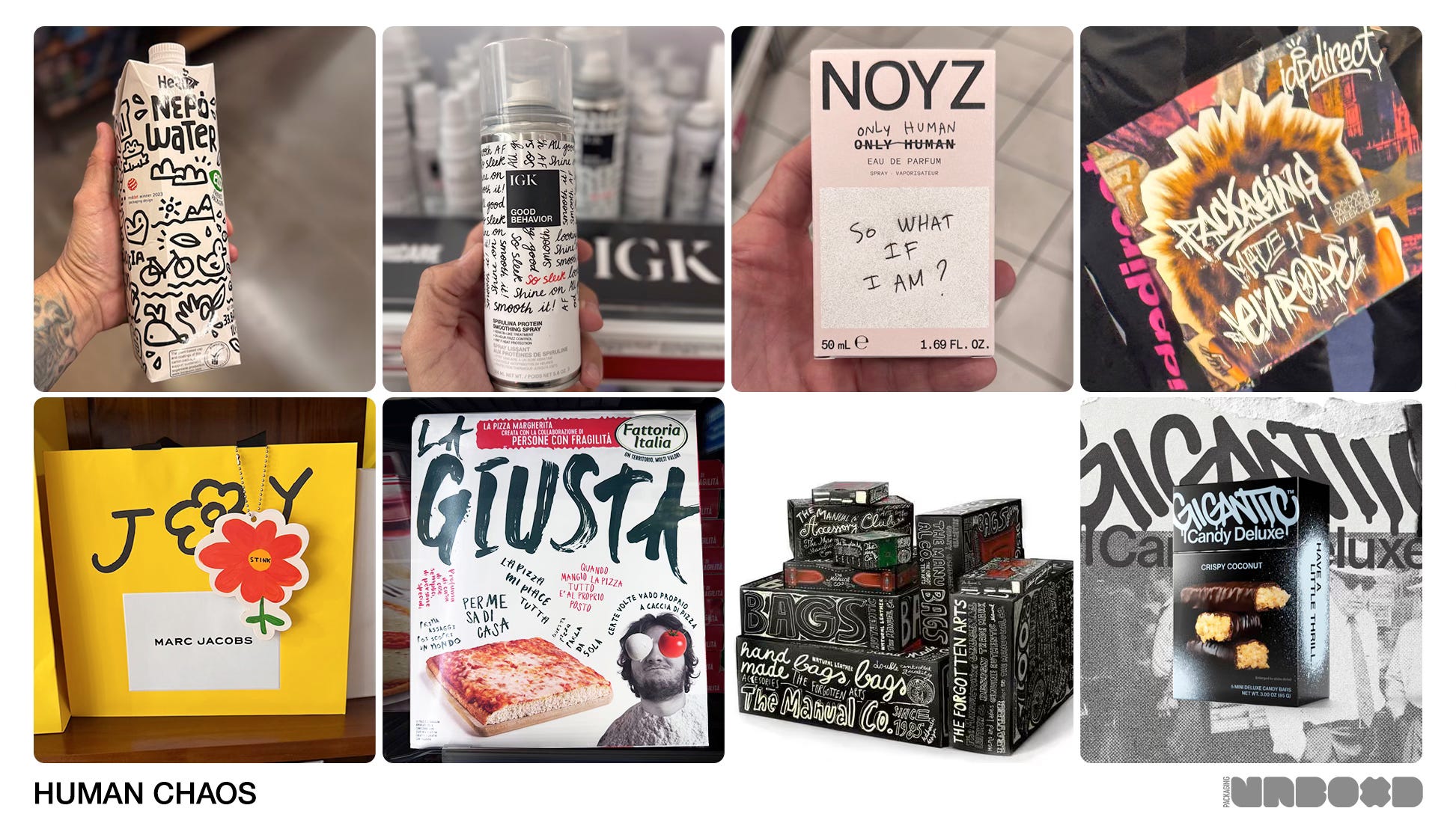
3. Human Chaos vs AI Perfection
AI tools are flattening design fast. Perfect gradients. Perfect symmetry. Perfect humans that don’t exist.
Consumers feel it instantly and even if they don’t know why, they just don’t trust it.
The counter-movement showing up on shelf is what I call Human Chaos: hand-scrawled type, imperfect registration, messy overlays, texture that feels touched. But the important part is that the chaos is controlled. Information hierarchy stays clean. The mess lives in expression, not message.
If your packaging looks like it could have been generated in five seconds, shoppers assume it was.
These are just Three of the Seven trends breaking packaging right now. The full report goes deeper into:
Packaging as artifact and sculpture
Color engineered for six-foot shelf impact
Soft, tech-inspired metallics in beauty
Lab-grade, proof-driven design replacing vibe-only Gen Z packs
If you design packaging, approve packaging, or pay for packaging and want to understand what’s actually changing you should watch this full breakdown.
👉 Watch the complete 2026 Packaging Design Trends report here
Click now and I’ll even throw in an Eighth trend nobody wants you to now about.
Remember, trends don’t build brands.
Understanding why they exist does.
—
Evelio
